
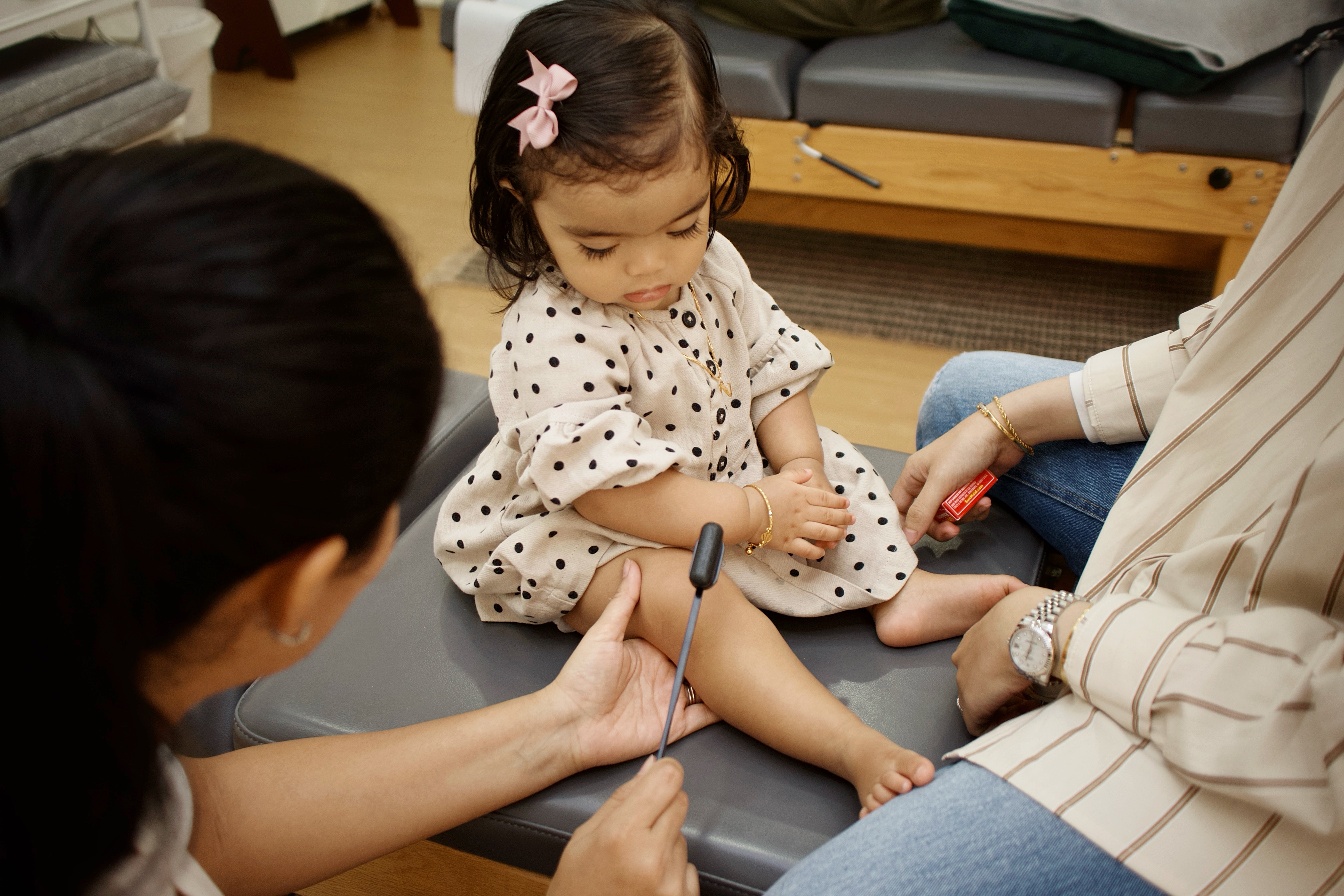
If you’re wondering whether your little one may benefit from baby chiropractic care in Singapore, you’re not alone. Many parents notice early signs through how their baby or child moves, feeds, sleeps, or responds to the world around them — long before their child can explain what feels uncomfortable.
One of the most common questions parents ask is:
“How do I know if my baby or child needs a chiropractic check?”
It’s a genuine concern, especially because babies and children don’t tell you their neck feels tight or their body feels uncomfortable. Instead, they communicate through how they move, feed, sleep, play, and respond to their environment. Most parents notice these changes long before their child can describe them.
Many mums and dads explore paediatric chiropractic not because something is “wrong,” but because they want their little one to grow, move, and develop with comfort and ease. Babies and children go through huge physical and neurological changes in those early years, and sometimes those changes create tension, asymmetry, or subtle discomfort that isn’t obvious at first.
Many families choose baby chiropractic care in Singapore simply to support healthy development, balance, and comfort as their child grows. This guide breaks down the signs parents commonly notice, what’s considered normal, and when it might be helpful to get your child checked.
Common Signs Your Child May Benefit From a Chiropractic Check
Babies and children may benefit from gentle paediatric chiropractic care if they show:
- Movement asymmetry
- Head-turning preference
- Difficulty feeding or latching
- Unsettled sleep
- Discomfort in certain positions
- Delayed or uncomfortable milestones
- Repeated falls or clumsy movement
- Posture changes
- Sensitivity to tummy time or nappy changes
Paediatric chiropractic care supports movement, comfort, symmetry, and nervous system regulation.

Understanding the Little Clues Your Child Shows
Children rarely tell us they’re uncomfortable , they show us. And the clues often start earlier than parents expect.
It may look like a baby who:
- Only feeds well on one breast
- Struggles with latching or pops on and off
- Arches their body during feeds
- Seems unsettled when lying on their back
- Prefers turning their head to one side
Feeding difficulties are one of the biggest early signs. Even in cases involving tongue ties or oral tension, babies often compensate with tightness in the jaw, neck, shoulders, or diaphragm. Feeding becomes harder not just because of the tongue — but because the body is working overtime.
As babies grow, these signs may shift into new ones:
- Avoiding tummy time
- Rolling only one direction
- Favouring one side during play
- Uneven crawling or movement
- Sitting in a consistent “W” position
Older children may show:
- Clumsy movement
- Posture changes
- Restlessness
- Frustration with certain activities
- Difficulty sitting still
Parents are never “overthinking it.” You are usually the first to notice tension or imbalance long before it becomes obvious to anyone else.

Movement Patterns Tell a Story
When a child prefers one movement pattern — rolling one way, crawling unevenly, or leaning to one side — the body is choosing the path that feels easiest.
But easiest doesn’t always mean balanced. Small tension patterns can affect:
- Core strength
- Coordination
- Balance
- Motor development
- Postural control
These patterns can start from birth, from a growth spurt, or from extended time in containers (car seats, swings, jumpers, walkers).
A gentle paediatric check can help identify where the body may be compensating and how to support balanced movement.
Behaviour Can Be a Clue Too
Sometimes the signs aren’t physical — they’re behavioural.
You may notice:
- Baby resisting tummy time
- Toddler getting upset during nappy changes
- Baby arching frequently
- Preschooler avoiding certain movements
- School-aged child becoming restless or overwhelmed
These are not naughty behaviours — they’re communication about comfort or how the nervous system is processing environments, positions, and movement.

The Modern World Adds Its Own Challenges
Even young children today face pressures from:
- Extended screen time
- Sitting for long hours
- Heavy school bags
- Early structured learning environments
This can lead to:
- Slouching
- Neck or shoulder tension
- Headaches
- Fatigue after school
- Difficulty focusing
These are common reasons older children come in for a check.
How Do You Know When to Seek Baby Chiropractic Care in Singapore?
The simplest answer: If something feels “off,” it’s okay to get it checked.
Parents often say:
“I can’t explain it, I just feel something isn’t quite right.”
And almost always, their instinct is correct.
Paediatric chiropractic care is gentle, age-appropriate, and focused on comfort. We assess how the spine, neck, pelvis, and nervous system are functioning. We also check whether the body is moving freely and symmetrically.
It’s not about diagnosing or treating illness. It’s about supporting comfort, easing tension, and encouraging balanced development.
What We Want Every Parent to Know
- You don’t need a diagnosis.
- You don’t need a major symptom.
- You don’t need to wait until things get worse.
Meaningful support often comes from understanding your child’s body early. This understanding helps them feel more at ease as they grow.
We’re Here to Support Your Child’s Journey
At New Beginnings Chiropractic, our paediatric approach is gentle, respectful, and tailored to your child’s stage of development. From tummy-time struggles to posture concerns, we can assist with these. We also address growing pains, focus challenges, and coordination differences. We’re here to help you make sense of what you’re seeing.
If you’ve noticed something different in your child’s movement, comfort, or behaviour, you’re welcome to book a paediatric chiropractic check with our team.
Explore our services to learn more:
- Prenatal & Postnatal Chiropractic Care
- Paediatric (Babies & Kids) Chiropractic Care
- Adults & Families Chiropractic Care
Learn more about the benefits of paediatric chiropractic on the ICPA website
Ready to begin?
Book your first visit with New Beginnings Chiropractic today.
📞 (+65) 8025 5190
📍 58A Jalan Jurong Kechil,
JK Building Singapore 598582


