
Quick Answer
Crawling isn’t just a box to tick off! It’s one of the most important stages of your baby’s brain development. In the lead-up to crawling, your baby’s brain and body are working together to build the coordination, strength, and cross-body communication they’ll rely on for years. Some babies move through this stage using patterns like army crawling, leopard crawling, or crawling on one side more than the other and while these are common, that doesn’t mean they’re something to leave alone. If your baby stays in one of these patterns for more than 1-2 months without progressing to full hands-and-knees crawling, or skips crawling altogether, it’s worth having their nervous system and movement checked. Catching this early is far easier than correcting it later.
Why Crawling Matters?
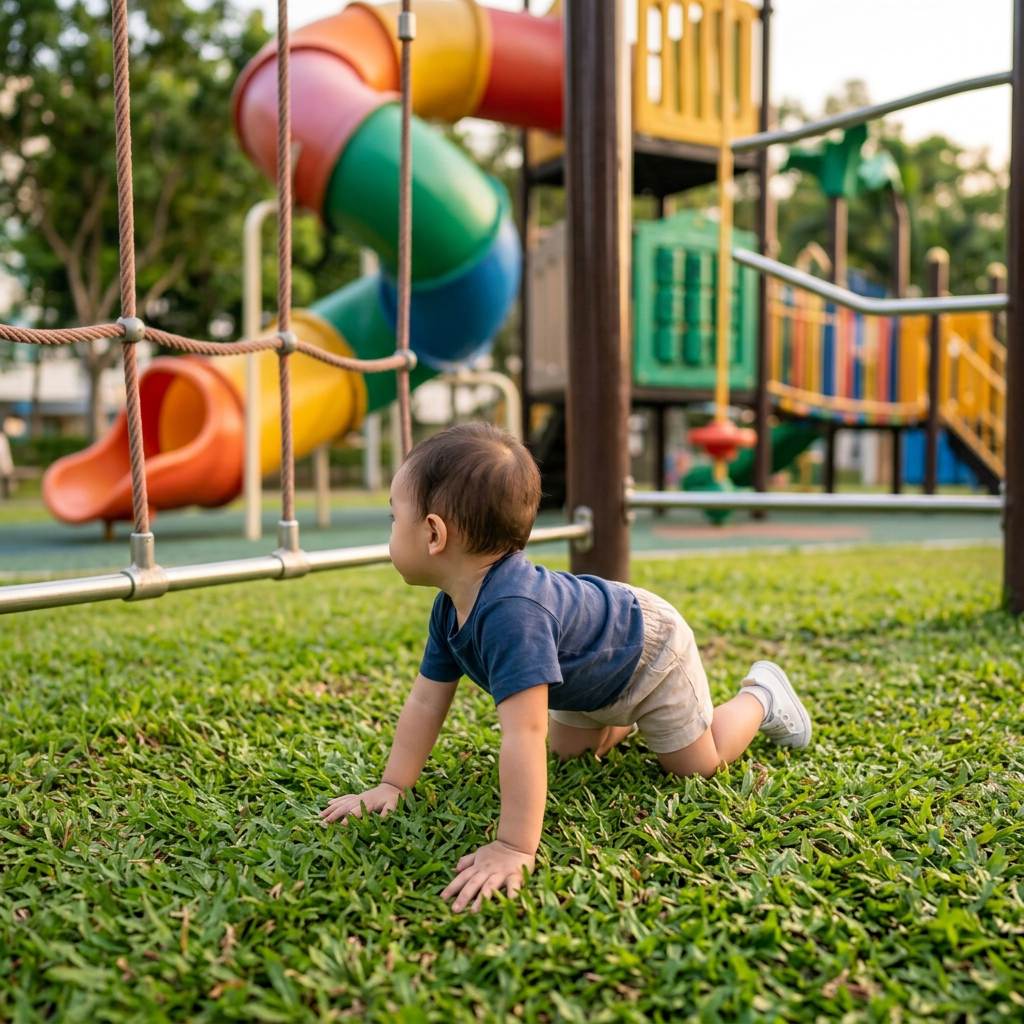
Crawling is one of the first times your baby’s brain has to coordinate both sides of the body at once — right arm with left leg, left arm with right leg. This is called cross-pattern (or contralateral) movement, and it’s not just about getting from A to B.
Every time your baby crawls, they’re building the neural pathways between the left and right hemispheres of the brain through the corpus callosum — the bridge that allows both sides of the brain to talk to each other. This cross-body communication is foundational for later skills like reading, writing, coordination, and even concentration.
Crawling also develops the vestibular system (balance and spatial awareness), strengthens the shoulder muscles needed for fine motor control later on, and helps refine how the nervous system processes sensory input from both sides of the body evenly.
This is why how a baby crawls and for how long matters so much more than simply whether they eventually get moving.

At What Month Do Babies Typically Start Crawling?
Most babies reach the baby crawling age somewhere between 6 and 10 months (later range of developmental milestone), but that number only tells half the story. The average crawling milestone isn’t a single moment that appears out of nowhere — it’s the visible result of months of groundwork. From as early as 3-4 months, your baby’s brain and body are already rehearsing the pieces crawling will eventually stitch together: neck and trunk control, weight-shifting on the belly, and the first flickers of coordinating one side of the body against the other. Crawling itself is simply the point where all of that groundwork becomes mobile.
What Are the Early Signs That a Baby Is About to Crawl?
The clearest signs baby is ready to crawl show up in how they use their body against gravity, not just whether they’re inching forward yet. Look for your baby rocking back and forth on hands and knees, pushing up into a sturdy plank-like position on their tummy, and reaching for objects with one arm while bearing weight through the other. These are early rehearsals of the same cross-pattern coordination described above — the brain practising the left-right handoff before the whole body is ready to move with it.
Types of Baby Crawling & Why They Shouldn’t Be Left Unchecked.
These patterns show up often, which is why so many parents are told they’re “just a phase.” In our clinical experience as trained Paediatric Chiropractors, common doesn’t mean normal! it deserves a proper look, not a ‘lets wait and see’.
- Army crawling (commando crawling): belly stays down, pulled forward mainly by the arms. Fine as a brief early stage; a concern past 1-2 months without progressing onto hands and knees. Unlike standard crawling, which lifts the trunk and requires true cross-pattern coordination between opposite arms and legs, army crawling stays flat and one-sided in effort — it should be a bridge, not a destination.
- Leopard crawling: the same pattern with more leg drive. Same rule applies.
- One-leg (asymmetric) crawling: one leg does more work than the other. If your baby is consistently crawling with one leg out, that’s usually the nervous system favouring one side, not a leg-specific issue — exactly the kind of pattern we assess for at New Beginnings Chiropractic.
- Bum shuffling: a seated scoot instead of hands-and-knees crawling. This skips cross-pattern movement entirely — not a harmless alternative, a missed developmental step.
- Crawling backwards first: normal in the early days as arm control outpaces leg control; a flag if it stays the dominant pattern beyond a few weeks.
Is It Normal for My Baby to Skip Crawling?
No. This is one of the things we feel most strongly about at NBC.
Skipping crawling means skipping the cross-pattern brain development crawling is designed to build. A baby who goes straight from sitting to standing to walking hasn’t “found their own way” and despite what well-meaning relatives might say, it’s not a sign of being ahead. They’ve bypassed a stage where critical left-right brain communication is meant to happen. This gap doesn’t always show up immediately; sometimes it surfaces later, in the form of coordination issues, handwriting difficulties, or trouble with focus and reading once a child reaches school.
Should I Be Worried If My Baby Skips Crawling and Goes Straight to Walking?
Yes, this is worth having assessed, not celebrated as being ahead of schedule. If your baby is skipping crawling, it’s something we’d want to look at, so we can understand why crawling isn’t happening and support your baby’s nervous system to catch up on that developmental work another way.
Is It Normal If My 9-Month-Old Baby Isn’t Crawling Yet?
Not having started crawling by 9 months is not, on its own, cause for alarm — plenty of babies are still in the lead-up work described above. What we’d want to check is whether that delay is paired with anything else on this list: a one-sided pattern, a favoured direction, or a total absence of any independent movement.
- Your baby has been army crawling, leopard crawling, bear crawling, or one-leg crawling for more than 1-2 months without progressing
- Your baby favours one side more than the other in any way — crawling, head turning, reaching
- Your baby is bum shuffling instead of crawling
- Your baby has skipped crawling and moved straight to standing or walking
- You simply have a gut feeling something’s not quite even or fluent in how your baby moves
You don’t need to wait for a pattern to “resolve on its own” to have it checked. The earlier a developing nervous system pattern is assessed, the easier it typically is to support.
The Bottom Line
Crawling is brain-building, not just baby-moving. Army crawling, leopard crawling, bear crawling, one-leg crawling, and bum shuffling are all common…but common is not the same as fine. If any of these patterns last beyond a month or two, or if your baby skips crawling altogether, it deserves a proper assessment, not a wait-and-see approach.
At New Beginnings Chiropractic, we look at how your baby is actually moving, not just whether they’re moving, because how the nervous system coordinates both sides of the body in these early months shapes so much of what comes later.
Ready to Begin?
📞 (+65) 8025 5190
📍 58A Jalan Jurong Kechil, JK Building Singapore 598582


